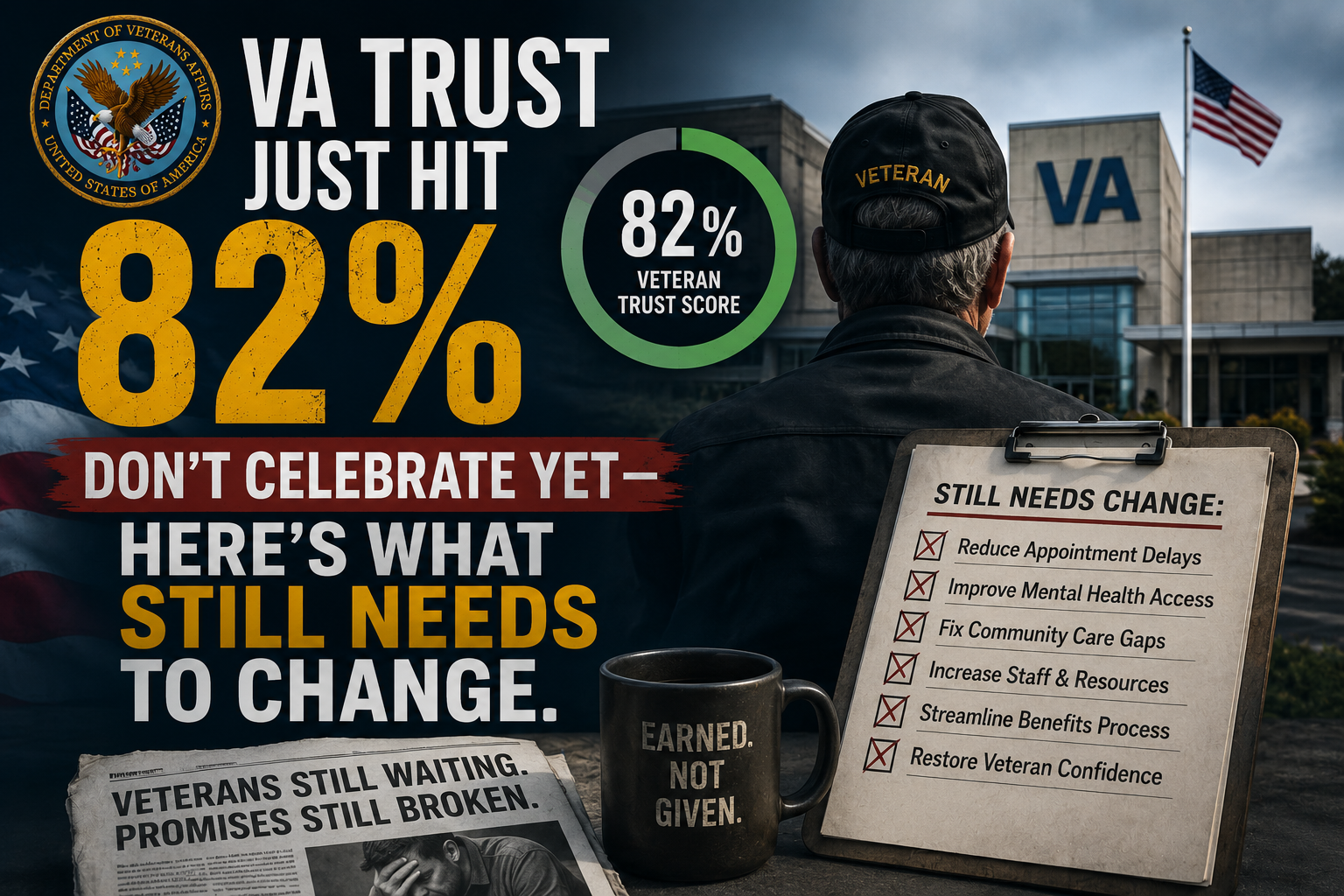
The VA has improved. Let's say that clearly and without hedging, because the veteran community has a tendency — completely earned, by the way — to be suspicious of any good news that comes out of that building in Washington. But the data on veteran trust in VA has been trending upward for several years now, and in Q1 of FY2026, it hit 82% — an all-time high.
Eighty-two percent of veterans who used VA services — including health care, benefits, burials, and memorials — said they trust the VA to fulfill the nation's commitment to them. That number comes from VA's own survey methodology, so take it with the appropriate grain of salt. But it's consistent with the directional trend seen in independent veteran satisfaction research over the same period.
What Actually Drove the Improvement
The Mission Act of 2018 changed the access calculus significantly by expanding community care options — allowing veterans to see private providers at VA expense when VA wait times or distance thresholds weren't met. That expansion reduced one of the most persistent veteran complaints: you need care, VA can't get you in for three months, and you have no good alternative.
The PACT Act of 2022 extended eligibility to hundreds of thousands of veterans who were previously locked out of VA health care — toxic exposure victims, burn pit veterans, those with conditions previously not recognized as service-connected. More veterans in the system who weren't there before, getting care they were owed, changes the trust equation.
-
Expanded telehealth options improved access for rural veterans who previously faced impossible travel demands.
-
The VA Health and Benefits mobile app reduced friction for common transactions — appointment scheduling, prescription refills, benefits status checks.
-
VBA claims processing improvements — including AI-assisted initial review — have reduced decision backlogs.
-
VA's investment in mental health access points, including same-day services at many medical centers, addressed a critical access gap.
What the 18% Still Represents
Eighteen percent of veterans who used VA services don't trust the VA. That's not a rounding error. If the VA system serves around 9 million unique veteran patients, 18% is more than 1.6 million people who showed up and still left feeling let down. The trust number is progress — it is not mission accomplished.
The gaps that remain are not evenly distributed. Rural veterans, minority veterans, women veterans, and veterans with complex mental health histories continue to report lower satisfaction and trust scores. The average hides outliers that matter enormously.
How Veterans Can Help VA Keep Improving
-
Respond to VA satisfaction surveys. The data drives resource allocation. Your feedback is not bureaucratic noise.
-
File formal complaints when care is substandard — use the Patient Advocate at your VA medical center.
-
Engage your VSO. Accredited service officers see patterns across many veterans' cases and can surface systemic issues to VA leadership.
-
Contact your congressional representative when you experience systemic failures. Veterans' constituent calls are among the highest-priority inquiries in any congressional office.
-
Share positive experiences too — the VA workforce, particularly frontline clinicians, are doing difficult work in an underfunded system. Recognition matters.
The Accountability Balance
The veteran community's role is to hold VA accountable — not just to criticize it when it fails, but to acknowledge when it improves and push for the next level of performance. An 82% trust score is something to build on. The question is: what does 90% look like, and what institutional changes does it require?
Join the Conversation
What's your experience with VA in the last year — better, worse, or unchanged? The 82% number only matters if the community fills in what it represents. Share your story.