Alright, listen up, everyone. When you’re out there serving, whether it’s downrange or stateside, you’re focused on the mission. But once you transition, or even while you’re still in, understanding your benefits becomes a mission in itself. And let’s be honest, sometimes it feels like trying to read a foreign language. This month, we’ve got some intel on two significant developments from the VA that could directly impact your financial readiness and how your service-connected conditions are rated: the 2026 Cost of Living Adjustment (COLA) for disability compensation and a proposed overhaul of mental health ratings.
For many of us, VA disability compensation isn’t just a bonus; it’s a vital part of our financial stability, especially for those whose service-connected conditions limit their ability to work. So, when changes are on the horizon, it’s crucial to understand what they mean for you and your family. Let’s break down these updates, cutting through the bureaucratic jargon to give you the straight scoop.
The 2026 COLA Increase: A Welcome Bump for Your Bottom Line
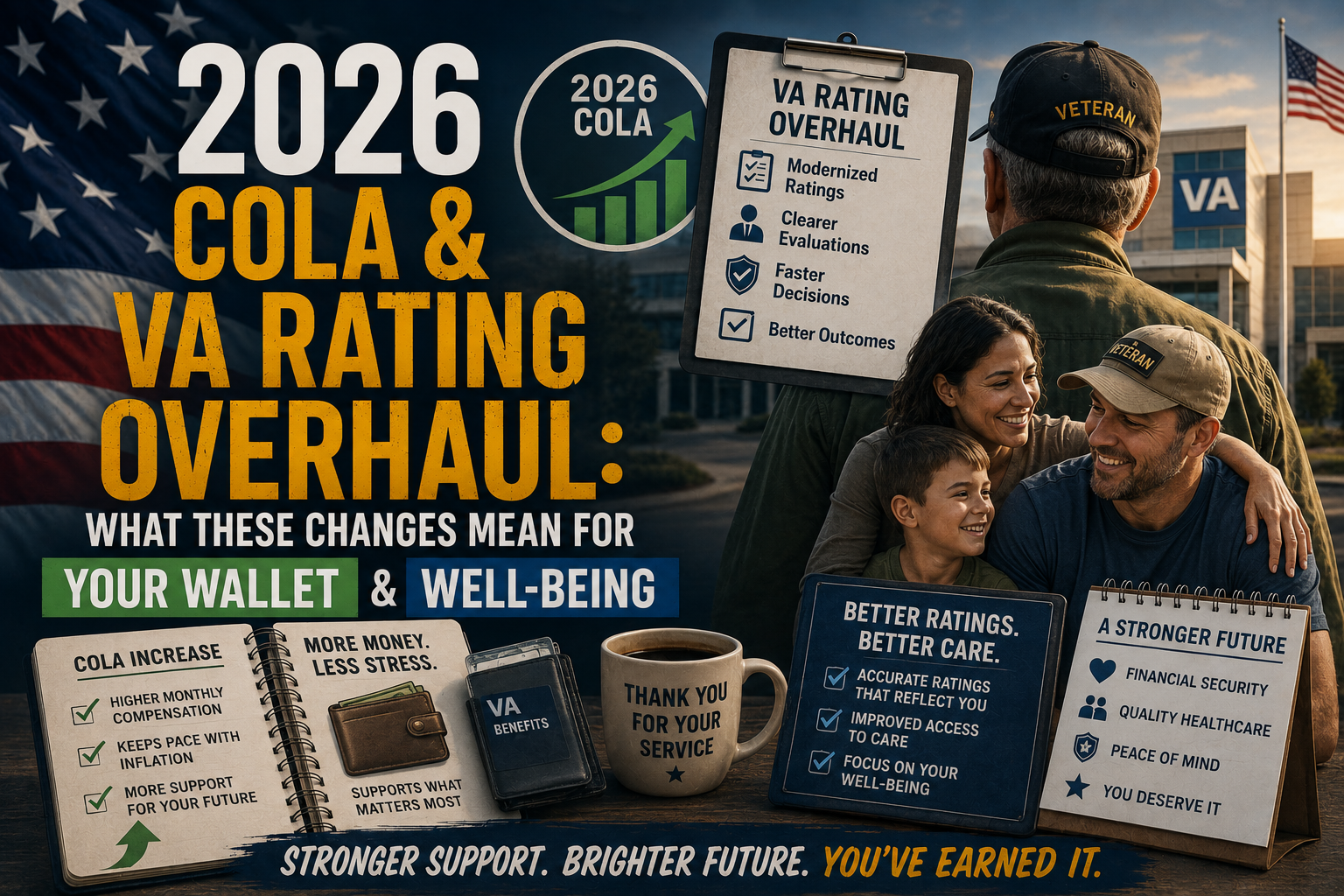
First, the good news for your wallet. The Department of Veterans Affairs has announced a 2.8% Cost of Living Adjustment (COLA) increase for disability compensation slated for 2026 [1]. While 2.8% might not sound like a massive jump, every little bit helps, especially with the rising cost of living that many military families and veterans are experiencing. This adjustment is designed to help your benefits keep pace with inflation, ensuring that your purchasing power doesn’t erode over time.
What is COLA and Why Does It Matter?
COLA is an annual adjustment made to various government benefits, including Social Security and VA disability compensation, to counteract the effects of inflation. It’s calculated based on the Consumer Price Index (CPI), which measures the average change over time in the prices paid by urban consumers for a market basket of consumer goods and services. In simpler terms, it’s the government’s way of saying, “Hey, things are getting more expensive, so we’re going to give you a little more to help you keep up.”
For veterans relying on disability compensation, this increase can mean:
•Maintaining Purchasing Power: It helps ensure that your benefits can still cover essential expenses like groceries, utilities, and housing, even as prices rise.
•Improved Financial Stability: While not a windfall, a consistent COLA helps in long-term financial planning and reduces the stress of a fixed income in an inflationary environment.
•Recognition of Sacrifice: It’s a small but important acknowledgment that the financial support provided to service-connected veterans needs to adapt to economic realities.
Actionable Step: Keep an eye on your VA payment statements starting in late 2025 or early 2026 to confirm the adjustment. No action is typically required on your part for COLA increases; they are usually applied automatically.
Proposed Overhaul of Mental Health Ratings: A Potential Game Changer
Now, let’s talk about something that could have an even more profound impact for many: a proposed overhaul of mental health ratings. For years, the way the VA rates mental health conditions has been a source of frustration and confusion for veterans and advocates alike. The current system, often criticized for being overly subjective and not fully capturing the severity of a veteran’s struggles, is due for a significant update.
While the specifics are still being finalized and debated, the general direction of these proposed changes aims to create a more equitable, transparent, and accurate system for evaluating mental health conditions. This could mean a fairer shake for many who’ve struggled with invisible wounds like PTSD, depression, anxiety, and TBI-related cognitive issues.
Why the Change? Addressing Common Frustrations
The current VA Schedule for Rating Disabilities (VASRD) for mental health has been in place for a long time, and many argue it doesn’t adequately reflect modern understanding of mental health conditions or their impact on a veteran’s life. Common frustrations include:
•Subjectivity: Ratings can sometimes feel inconsistent, depending on the examiner and the interpretation of symptoms.
•Lack of Nuance: The current system may not fully capture the complex and fluctuating nature of mental health conditions, leading to ratings that don’t accurately reflect a veteran’s functional impairment.
•Focus on Symptoms, Not Function: Critics argue the system often focuses too much on a checklist of symptoms rather than the actual impact these symptoms have on a veteran’s ability to work, maintain relationships, and engage in daily life.
The proposed overhaul seeks to address these issues by potentially:
•Emphasizing Functional Impairment: Shifting the focus more towards how a mental health condition impacts a veteran’s social and occupational functioning, rather than just the presence of symptoms.
•Updating Diagnostic Criteria: Aligning the rating schedule with the latest medical and psychological understanding of mental health conditions.
•Increasing Transparency: Making the rating process clearer and more understandable for veterans.
Actionable Step: This is a developing story. Stay tuned to official VA announcements and reputable veteran advocacy groups for updates. If you have a pending mental health claim or are considering filing one, consult with a VSO who will be up-to-date on the latest proposed changes and how they might affect your claim. Understanding these potential shifts early can help you prepare your documentation and approach.
Addressing Misconceptions and Preparing for the Future
•Misconception: "A COLA increase means my disability rating will change." No, the COLA increase is a percentage adjustment to your existing compensation amount; it does not change your disability rating itself.
•Misconception: "The mental health rating overhaul will automatically increase my rating." Not necessarily. The goal is to make ratings more accurate and equitable. For some, this might mean an increase, for others, it might mean a more precise rating that reflects their actual functional impairment. It’s about fairness, not guaranteed increases.
•Frustration: "The VA is always changing things, it's hard to keep up." We hear you. The VA is a massive organization, and changes are often slow and complex. However, these changes are usually aimed at improving the system. Your best defense is a good offense: stay informed, connect with VSOs, and advocate for yourself.
Conclusion
The 2026 COLA increase and the proposed overhaul of mental health ratings are significant developments for the veteran community. The COLA provides a necessary adjustment to help maintain your financial readiness, while the mental health rating changes have the potential to create a more just and accurate system for evaluating the invisible wounds of war. Staying informed, seeking expert guidance from VSOs, and understanding how these changes might apply to your individual situation are your best strategies. You’ve earned these benefits, and understanding these updates is part of ensuring you receive everything you’re entitled to.
How do you feel about the upcoming COLA increase and the proposed mental health rating overhaul? Have you experienced challenges with mental health ratings in the past? Share your thoughts, concerns, and advice in the comments below. Let’s foster a community where we can discuss these vital issues and support each other. And don’t forget to share this article with your fellow veterans – this is intel everyone needs!
References
[1]: https://www.militarybenefit.org/get-educated/whats-new-for-military-benefits-2026/ "What's New for Military Benefits in 2026"