Alright, listen up, warriors. We’ve all been there. That moment when the uniform comes off for the last time, the DD-214 is in hand, and you’re standing at the edge of a new, unfamiliar world. For some, it’s a triumphant leap; for others, it feels like jumping out of a perfectly good aircraft without a chute. The military instills in us incredible physical and mental toughness, but the transition to civilian life can test even the most resilient among us. The camaraderie, the clear mission, the structured environment—it all vanishes, often leaving a void that’s hard to fill.
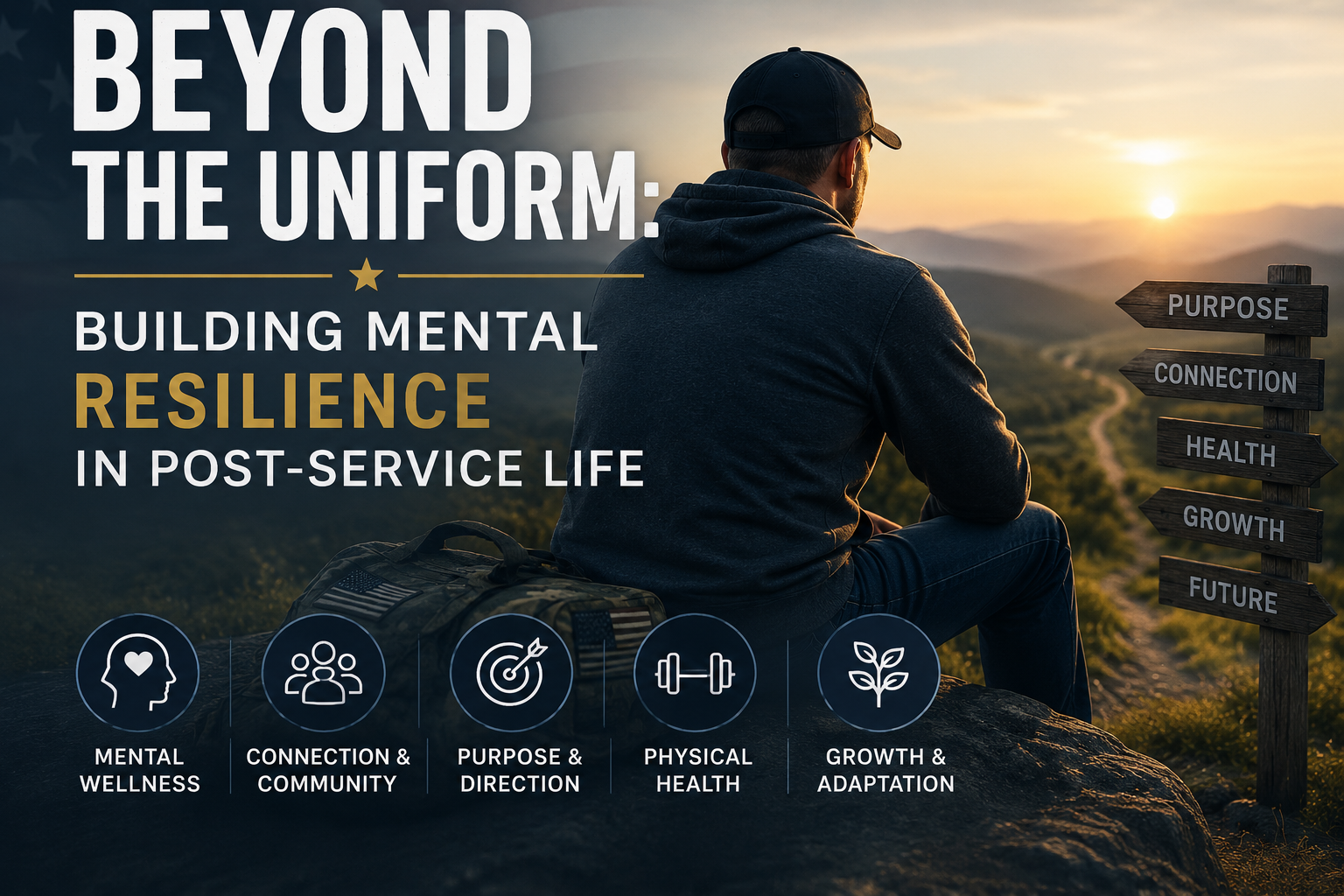
This month, we’re talking about something critical, something that’s often overlooked until it becomes a crisis: mental resilience in post-service life. It’s not about being “tough” and bottling things up; it’s about building the internal strength and coping mechanisms to navigate the unique challenges that come with life after service. From combating isolation to finding new purpose, cultivating mental resilience is your most important mission once you’re out of uniform.
The Invisible Wounds: Why Transition Can Be Tough on the Mind
We’re trained to be strong, to push through pain, and to never show weakness. But the reality is, military service, especially combat deployments, can leave invisible wounds that don’t always manifest until years later. The transition often exacerbates these issues, leading to:
•Loss of Identity: Your military identity was a huge part of who you were. Losing that can feel like losing a piece of yourself, leading to confusion and a sense of aimlessness.
•Isolation and Lack of Camaraderie: The tight-knit bonds forged in service are incredibly difficult to replicate in civilian life. This can lead to profound loneliness and a feeling that no one truly understands what you’ve been through.
•PTSD and TBI: Post-Traumatic Stress Disorder and Traumatic Brain Injury are prevalent among veterans, and their symptoms can make daily life, relationships, and employment incredibly challenging.
•Moral Injury: Sometimes, the experiences of war can challenge a service member’s deeply held moral beliefs, leading to guilt, shame, and anger that can be difficult to process.
•Difficulty Finding Purpose: After serving a clear, impactful mission, civilian jobs can sometimes feel mundane or lacking in significance, leading to a struggle to find new meaning.
These aren’t signs of weakness; they’re normal reactions to extraordinary circumstances. Recognizing them is the first step toward building resilience.
Building Your Mental Armor: Strategies for Resilience
Mental resilience isn’t something you’re born with; it’s a skill you develop, much like marksmanship or tactical proficiency. Here’s how to build your mental armor in post-service life:
1. Reconnect and Rebuild Your Tribe (Your New Battle Buddies)
The military taught us the power of teamwork and the importance of having someone watching your six. Don’t lose that. Actively seek out new connections and rebuild your support network.
•Actionable Step: Join veteran organizations (VFW, American Legion, Team Rubicon, Wounded Warrior Project), find local veteran groups, or connect with fellow service members through online forums. These communities offer a sense of belonging and shared understanding. Don’t be afraid to reach out to old battle buddies; they’re probably going through similar struggles.
•Common Frustration: "Civilians just don't get it." While true to some extent, many civilians are eager to support veterans. Focus on finding those who are empathetic and willing to listen, and educate them where you can.
2. Find Your New Mission (Purpose-Driven Living)
That sense of purpose you had in the military doesn’t have to disappear. It just needs a new target. Whether it’s a new career, volunteer work, or a passion project, having a clear objective can provide direction and meaning.
•Actionable Step: Reflect on what truly motivates you. What problems do you want to solve? What skills do you want to develop? Explore volunteer opportunities that align with your values, pursue further education, or start a small business. Even small, achievable goals can provide a sense of accomplishment.
•Real-World Example: Many veterans find purpose in advocacy, helping other veterans navigate benefits or mental health challenges. Others channel their discipline into physical challenges like marathons or mountaineering.
3. Prioritize Physical Health (The Foundation of Mental Strength)
We know the importance of physical fitness in the military. That doesn’t change in civilian life. Your physical health is inextricably linked to your mental well-being.
•Actionable Step: Maintain a regular exercise routine. Even a daily walk can make a huge difference. Focus on a balanced diet and ensure you’re getting adequate sleep. Avoid excessive alcohol or substance use, which can be tempting but ultimately detrimental to mental health.
•Misconception: "I don't have time." Make time. Treat your physical health like a non-negotiable mission requirement. It’s an investment in your overall well-being.
4. Seek Professional Help (No Shame in Reinforcements)
Asking for help is a sign of strength, not weakness. If you’re struggling with persistent feelings of sadness, anxiety, anger, or difficulty coping, don’t hesitate to reach out to mental health professionals.
•Actionable Step: Utilize VA mental health services. They offer a range of treatments, from therapy to medication management. If the VA isn’t a good fit, explore community resources or private therapists specializing in veteran issues. Telehealth options have also expanded significantly, making access easier.
•Common Frustration: "It's hard to find a good therapist who understands veterans." Keep looking. There are many excellent clinicians who specialize in military culture and trauma. Ask for recommendations from VSOs or trusted battle buddies.
5. Practice Mindfulness and Self-Care (Tactical Pauses for the Mind)
In the military, we learned to be constantly alert. In civilian life, it’s important to learn to de-escalate and find moments of calm. Mindfulness practices can help you stay grounded.
•Actionable Step: Incorporate practices like meditation, deep breathing exercises, or spending time in nature into your daily routine. Even 5-10 minutes a day can reduce stress and improve focus. Engage in hobbies that bring you joy and allow you to relax.
Conclusion
Building mental resilience in post-service life is an ongoing mission, not a one-time event. It requires the same dedication, discipline, and adaptability that you demonstrated in uniform. By actively reconnecting with your community, finding new purpose, prioritizing your physical health, seeking professional help when needed, and practicing self-care, you can not only survive but thrive in civilian life. Your service to our nation didn’t end when you took off the uniform; your mission now is to live a full, meaningful life, and that starts with taking care of your mind.
Call-To-Action
What strategies have you found most effective for building mental resilience after service? What advice would you give to a veteran who is struggling? Share your insights and experiences in the comments below. Let’s create a space for open discussion and mutual support. And if you know a battle buddy who needs to hear this message, please share this article – it could be the lifeline they need.