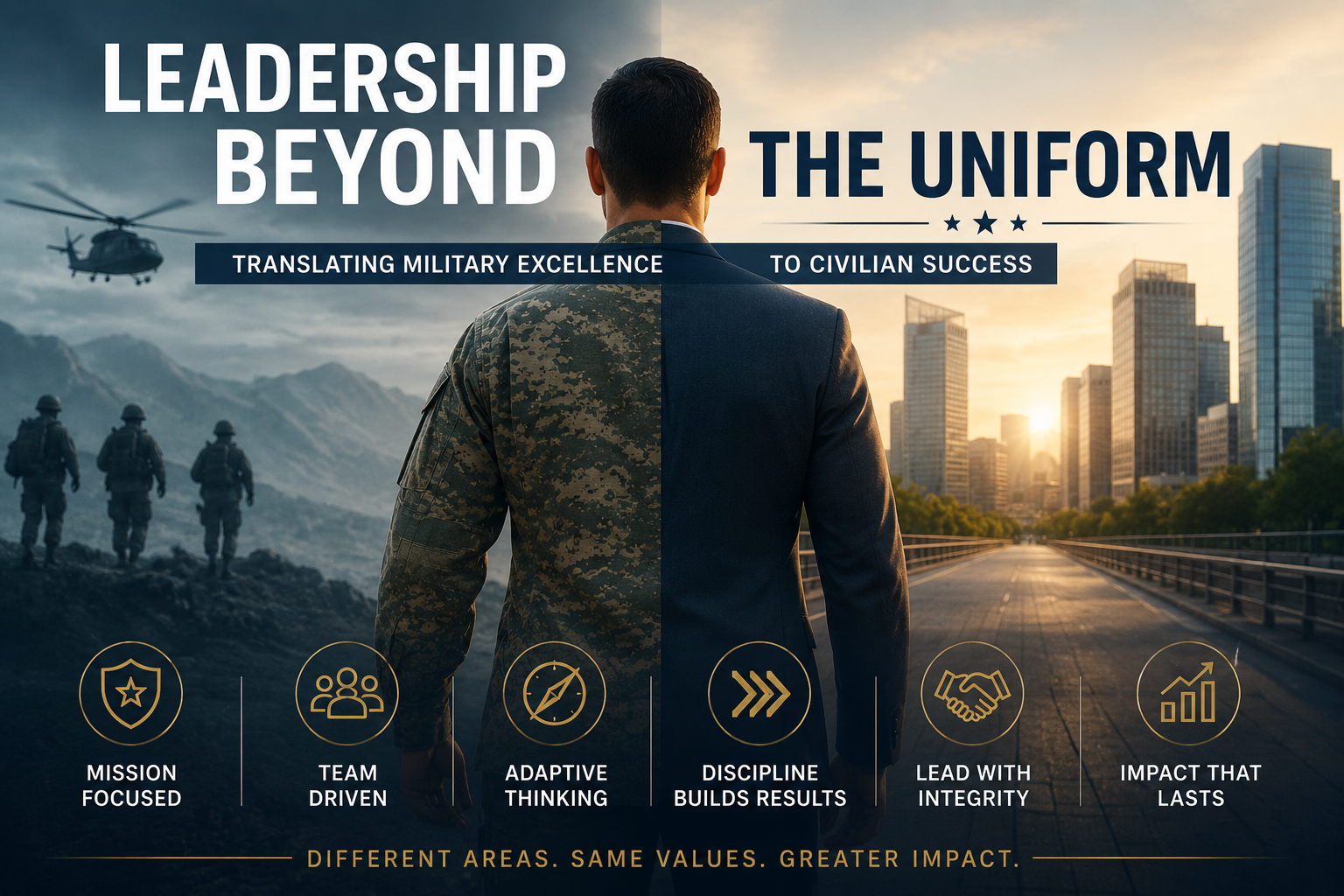
Alright, listen up, leaders. Whether you wore stripes, bars, or stars, you were forged in an environment that demands decisiveness, integrity, and the ability to inspire. You led teams, managed complex operations, and made critical decisions under pressure. You were responsible for the lives and well-being of your troops, and you delivered on the mission, every single time. Now, as you transition out of uniform, or even if you’ve been out for a while, there’s a common misconception that your military leadership skills somehow don’t translate to the civilian world.
Let’s be clear: that’s a load of hooey. Your military leadership experience isn’t just valuable; it’s a superpower in the civilian sector. Companies are desperate for individuals who can lead, problem-solve, and build cohesive teams. Entrepreneurial ventures thrive on the discipline and strategic thinking you possess. This month, we’re diving deep into how you can effectively translate your NCO and Officer leadership skills into corporate success, entrepreneurial ventures, and meaningful community impact. It’s time to recognize the immense value you bring to any organization, beyond the uniform.
The Unmatched Value of Military Leadership
Think about what you did every single day in the military. You were a manager, a trainer, a mentor, a strategist, and often, a counselor. These aren’t just soft skills; they are critical competencies that civilian organizations often struggle to cultivate. Here’s why your military leadership is a cut above:
•Decisive Decision-Making Under Pressure: You’ve made life-or-death decisions with incomplete information in chaotic environments. Civilian boardrooms, while high-stakes, rarely compare to the intensity of a combat zone. Your ability to remain calm, assess, and act is invaluable.
•Team Building and Cohesion: You know how to take a diverse group of individuals and forge them into a high-performing team, often under extreme circumstances. You understand the importance of camaraderie, mutual trust, and shared purpose.
•Problem-Solving and Adaptability: The military constantly throws curveballs. You learned to adapt, innovate, and overcome obstacles with limited resources. This agile mindset is precisely what businesses need in today’s rapidly changing markets.
•Integrity and Ethics: The military instills a strong moral compass and an unwavering commitment to doing the right thing, even when no one is watching. These ethical foundations are the bedrock of trustworthy leadership.
•Mission-Oriented Focus: You understand what it means to have a clear objective and to relentlessly pursue it until completion. This mission-first mentality drives results and inspires others.
Translating Your Stripes and Bars to Civilian Success: Actionable Steps
So, how do you take these incredible skills and make them resonate with civilian employers or apply them to your own ventures? It’s all about translation and presentation.
1. Master the Art of Translation (Your New Language)
This is perhaps the most critical step. Civilian HR managers and hiring authorities often don’t understand military jargon. Your job is to translate your military experience into civilian-friendly terms that highlight your transferable skills.
•Actionable Step: Instead of saying, “I was an NCOIC of a platoon,” say, “I led a team of 30 personnel, responsible for their training, welfare, and the successful execution of complex operational objectives.” Use keywords like
"leadership," "project management," "team building," "strategic planning," "logistics," and "risk assessment."
•Real-World Example: A former military police officer might highlight their experience in security management, crisis intervention, and training personnel, rather than just
"patrolling." A supply sergeant becomes a logistics and inventory management expert.
2. Network Strategically (Building Your Civilian Command Structure)
Your military network is strong, but you need to build a civilian one too. Networking isn’t just about finding a job; it’s about understanding industry trends, finding mentors, and identifying opportunities.
•Actionable Step: Attend industry events, join professional organizations, and leverage platforms like LinkedIn. Connect with other veterans who have successfully transitioned into your desired field. They can offer invaluable insights, advice, and introductions. Don’t be afraid to reach out; most veterans are eager to help their own.
•Common Frustration: "Networking feels fake or forced." Think of it as building rapport and gathering intelligence, just like you would in the military. It’s about building relationships, not just asking for favors.
3. Seek Mentorship (Learning from Experienced Officers)
Just as you had NCOs and officers who guided you in the military, seek out mentors in the civilian world. These individuals can provide guidance, open doors, and help you navigate the unwritten rules of corporate culture.
•Actionable Step: Look for mentors through veteran mentorship programs, professional associations, or even within your new company. Be clear about what you’re looking for in a mentor and be prepared to listen and learn.
4. Embrace Entrepreneurship (Leading Your Own Operation)
Many veterans find that the ultimate expression of their leadership skills is through entrepreneurship. The discipline, resilience, and problem-solving abilities honed in the military are perfectly suited for starting and growing a business.
•Actionable Step: Explore resources like the Small Business Administration (SBA) Office of Veterans Business Development, VetFran (for franchising opportunities), and local veteran entrepreneurship programs. Develop a solid business plan, seek funding, and leverage your network.
•Real-World Example: A former Special Forces operator might start a security consulting firm, or a logistics specialist might launch a supply chain management company. The possibilities are endless.
5. Continue to Serve (Impact Beyond Profit)
Your desire to serve doesn’t have to end with your military career. Many veterans find immense satisfaction in continuing to lead and impact their communities through volunteer work, non-profit leadership, or local government.
•Actionable Step: Identify causes you’re passionate about and find organizations where your leadership skills can make a difference. Whether it’s mentoring at-risk youth, leading a local VSO chapter, or running for local office, your leadership is needed.
Addressing Common Misconceptions
•"My military experience isn't relevant." This is perhaps the biggest lie told to transitioning service members. Your experience is highly relevant. It just needs to be articulated in a way that civilian employers understand. Don't undersell yourself.
•"I need a fancy degree to be a leader in the civilian world." While education is valuable, your practical leadership experience often trumps a degree alone. Many companies prioritize demonstrated leadership over academic credentials, especially for mid-level and senior roles.
•"I'm too rigid for the civilian world." While the military has a strict structure, you also learned adaptability and critical thinking. Highlight your ability to operate in ambiguous environments and your capacity for strategic thought, not just following orders.
Conclusion
Your military leadership experience is not just a footnote on your resume; it’s the foundation of your future success. The discipline, resilience, strategic thinking, and unwavering commitment to mission and team that you cultivated in uniform are precisely the qualities that drive success in the civilian world. By effectively translating your skills, strategically networking, seeking mentorship, and embracing new opportunities, you can continue to lead, innovate, and inspire, making a profound impact far beyond the uniform. Don’t just transition; lead the way.
Call-To-Action
How have you successfully translated your military leadership skills into civilian success? What advice would you give to transitioning NCOs and Officers? Share your insights, strategies, and experiences in the comments below. Let’s empower each other to recognize and leverage the incredible leadership potential within our veteran community. And if you know a leader who needs to hear this message, pass it along!