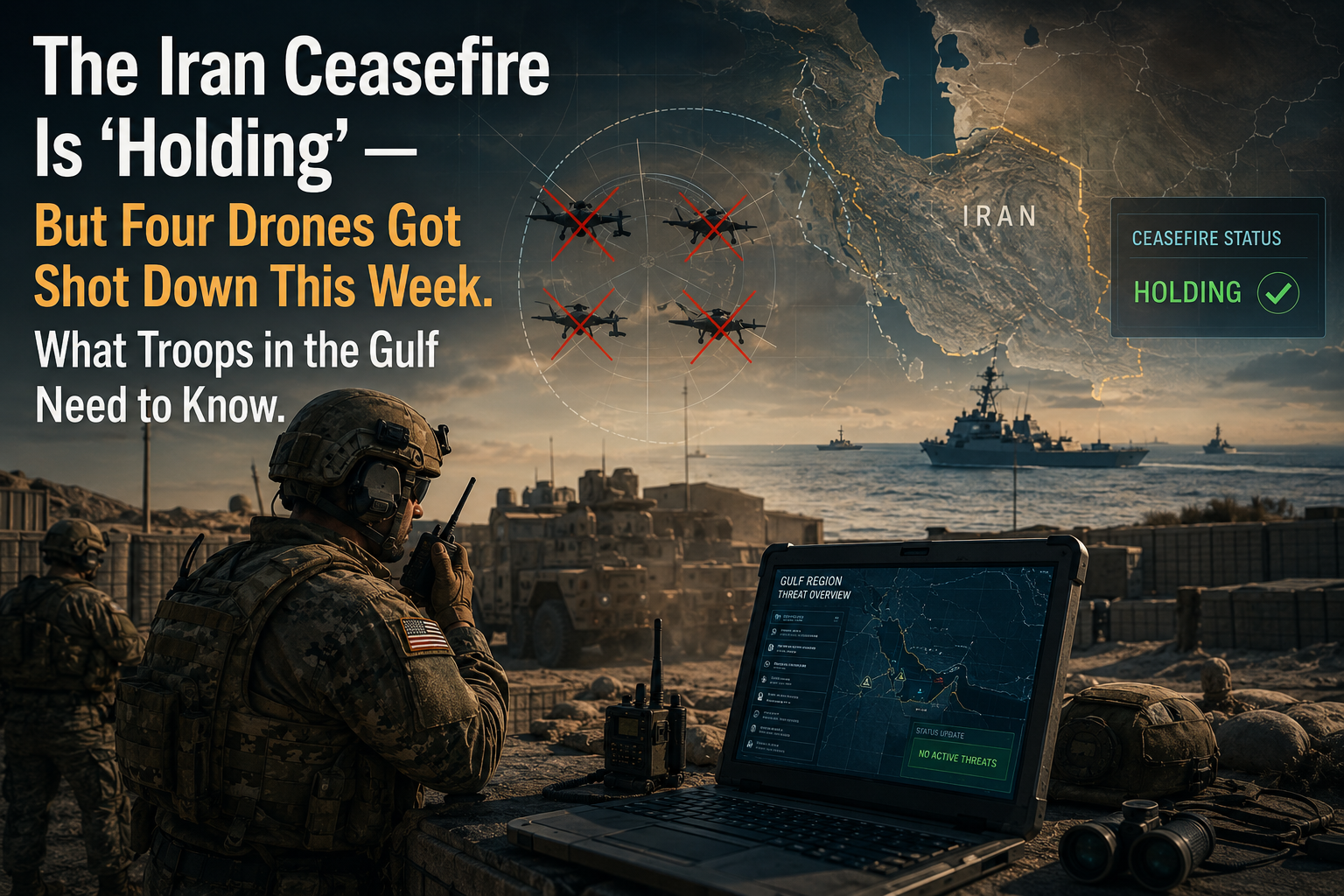
In any other context, shooting down four armed drones and striking a ground control station would be called 'combat.' The U.S. government is calling it 'defensive action consistent with the ceasefire.' For the troops in the Gulf right now, the semantics matter a lot less than the reality: the threat environment hasn't changed, and nobody is flying home soon.
On May 27-28, 2026, U.S. forces conducted new strikes on Iranian military infrastructure near Bandar Abbas — a strategic port city at the mouth of the Strait of Hormuz — after Iranian drones threatened U.S. ships and commercial traffic in the region. A U.S. official confirmed the strikes and described them as 'measured, purely defensive, and intended to maintain the ceasefire.' The Strait of Hormuz has been closed to commercial traffic since the war began.
The Operational Reality in the Gulf Right Now
Three carrier strike groups are operating in and around the Gulf. Marine Expeditionary Units are forward-deployed. The 82nd Airborne has been moving elements toward the region. Special Operations forces are conducting missions that are, by definition, not being disclosed in DoD press releases.
For troops deployed to this theater, the situation is a textbook example of a 'low-intensity conflict that isn't low-intensity for the people in it.' The tempo of operations is high. The threat spectrum is broad — from conventional Iranian military assets to IRGC proxy forces to the drone swarm capability that has been the most operationally impactful threat of this conflict.
What Families Back Home Need to Hear
Military families watching the news from home are getting a fractured picture. Official U.S. statements talk about 'defensive actions' and a 'holding' ceasefire. News footage shows drone intercepts, strikes, and secondaries from munitions storage hits. The gap between those two narratives is genuinely disorienting.
-
Contact your FRG (Family Readiness Group) or equivalent organization for theater-appropriate communication updates — not for operational details, but for family support context.
-
Limit consumption of social media speculation about deployment specifics. Unverified information spreads fast in military family networks and causes unnecessary anxiety.
-
Your service member's unit should have an FRG leader or key contact who can field questions. Use that resource.
-
Mental health support for military families during active combat operations is available through Military OneSource (800-342-9647) — confidential, free, and accessible.
-
Prepare, don't panic. Review your financial power of attorney, ensure DEERS is updated, confirm SGLI coverage is current.
The OPSEC and Morale Challenge for Deployed Troops
When the political leadership is calling a situation a 'ceasefire' while troops on the ground are still taking fire and executing strikes, it creates a morale and OPSEC challenge that experienced NCOs know well. The mission doesn't change because of what it's called in a press release. But the disconnect between public narrative and operational reality can affect troop morale if leadership doesn't address it directly.
Commanders in this theater have a responsibility to give their troops a clear-eyed operational picture within the limits of what can be shared. Troops perform better when they understand what they're doing and why — not when they're parsing Pentagon press releases that seem disconnected from their daily reality.
For Veterans Watching This Unfold
If you deployed to the Gulf, to Iraq, to Afghanistan — you recognize the rhythm of this. The official optimism that doesn't quite match the ground truth. The bureaucratic language that smooths over the rough edges of what's actually happening. The families at home trying to reconcile the news with what their service member's infrequent calls suggest.
Your experience matters here. Not for armchair analysis, but for supporting the families and the junior service members who are living through their first major combat deployment and trying to make sense of it. Be that resource for your community.
Join the Conversation
Are you a veteran of Gulf deployments or Middle East operations who wants to share perspective with current service members' families? Or are you a military family member trying to navigate the information landscape right now? Connect with the community below — you're not alone in this.