Every service member knows the drill. The pre-deployment briefs, the endless packing lists, the goodbyes that never quite feel final. Whether you’re PCSing to a new duty station, ETSing and facing the daunting civilian world, or gearing up for another deployment, there’s a shared understanding of the sacrifices inherent in military life. We’ve all been there, pushing through exhaustion, relying on our battle buddies, and trusting our chain of command to get us through. We understand the weight of the uniform, the unspoken bond forged in shared hardship, and the ever-present reality that our chosen path carries inherent risks.
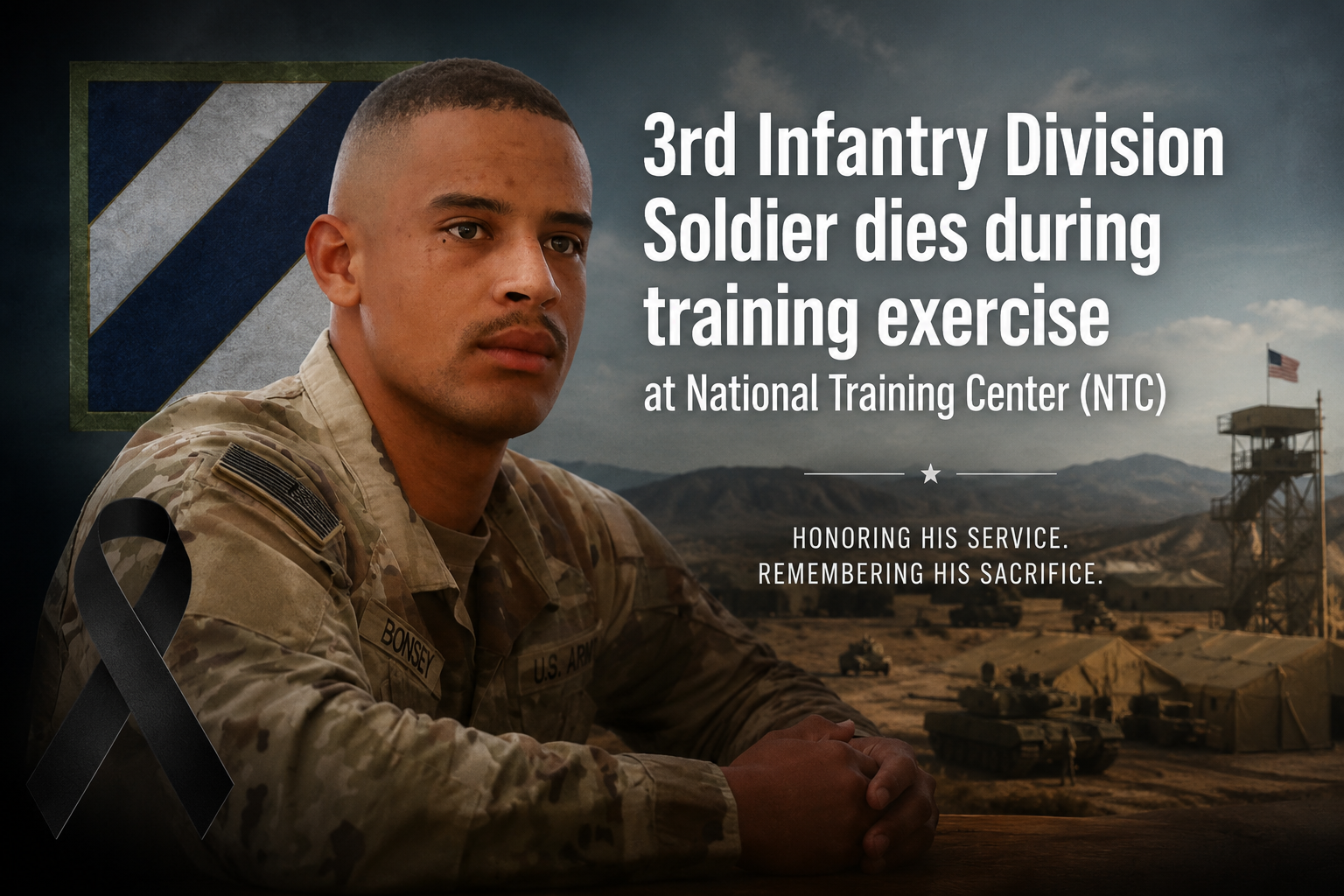
It’s with a heavy heart that we at Mil Reporter share news that hits close to home for many of us. Spc. Adrian Bonsey, a 29-year-old combat engineer with the 9th Engineer Battalion, 2nd Armored Brigade Combat Team, 3rd Infantry Division, tragically died during a training exercise at the National Training Center (NTC) on June 10, 2026. He was struck by an M2 Bradley at approximately 4:30 a.m. while performing his duties on foot in an area of limited visibility. Spc. Bonsey, a New York native, joined the Army in 2023, served at Fort Carson, Colorado, and deployed to Poland in 2024. His awards included two Army Achievement Medals. This isn't just a news headline; it's a stark reminder of the constant vigilance and dedication required of our service members, even when not in direct combat. It’s a reminder that the cost of freedom is sometimes paid on the training ground, far from the battlefield.
The Reality of Training: A Constant Vigil
For those who’ve been, NTC isn’t just another field exercise. It’s the crucible, the proving ground where units are pushed to their absolute limits, simulating the chaos and intensity of large-scale combat operations. It’s where doctrine meets dirt, where the rubber meets the road, and where every decision, every movement, can have real-world consequences. The hours are long, the conditions are harsh, and the stakes, though simulated, feel incredibly real. From navigating complex terrain in limited visibility to coordinating combined arms maneuvers, every Soldier, from the newest private to the seasoned NCO, is expected to perform under immense pressure.
Spc. Bonsey’s role as a combat engineer is critical in these environments. They’re the ones clearing paths, building defenses, and ensuring mobility for the fighting force. Their work often puts them in close proximity to heavy equipment and dynamic situations, demanding unwavering focus and adherence to safety protocols. When an incident like this occurs, it underscores the inherent dangers of even the most meticulously planned training. It reminds us that accidents, though rare, are a tragic possibility in an environment designed to replicate the unforgiving nature of war. The U.S. Army’s Combat Readiness Center, the Department of the Army Criminal Investigation Division, and the U.S. Army Transformation and Training Command are investigating the incident, a standard procedure to understand what happened and prevent future tragedies.
Beyond the Headlines: Supporting Our Own
When a Soldier falls, the ripple effect extends far beyond their immediate family. It hits the unit hard. Battle buddies, who’ve shared everything from MREs to late-night guard shifts, feel the loss acutely. The entire chain of command grapples with the weight of such an event. It’s a moment that tests the mental resilience of everyone involved. For many, it brings back memories of other losses, other close calls, and the ever-present question of
“why?”
This is where the strength of our military community truly shines. We rally. We support. We remember. It’s a time to check in on your battle buddies, reach out to those who might be struggling, and ensure that no one grieves alone. For families, the news of a training death can be particularly devastating, bringing to the forefront the fears that every military spouse and parent carries. It’s a stark reminder that even stateside, even in training, the risks are real.
Finding Strength in Community and Resources
In times of loss and uncertainty, leaning on the resources available to our military community is paramount. It’s not a sign of weakness; it’s a testament to our collective strength. For those grappling with grief, survivor’s guilt, or simply the weight of it all, remember that help is available.
•Mental Health Support: The VA offers a wide range of mental health services, from counseling to support groups. Don't wait until you're in crisis. Reach out. Organizations like the Wounded Warrior Project and Mission 22 also provide critical support for mental health and PTSD. Your unit’s behavioral health resources are also there for you. Use them.
•Family Support: Military OneSource (https://www.militaryonesource.mil/) is an invaluable resource for military families, offering counseling, financial advice, and support for navigating military life. Connecting with other military spouses and families can also provide a vital network of understanding and empathy.
•Chaplain Services: For many, faith plays a crucial role in coping with loss. Unit chaplains are available to provide spiritual guidance and support to service members and their families, regardless of religious affiliation.
•Grief Counseling: Specialized grief counseling services are available through the VA and various non-profit organizations to help individuals and families process their loss in a healthy way.
It’s easy to feel isolated when tragedy strikes, but remember the bonds that tie us together. The military community is a vast, interconnected network, and we are stronger together. Whether it’s a simple phone call to a buddy, attending a support group, or seeking professional help, taking that first step is crucial.
The Enduring Legacy of Service
Spc. Adrian Bonsey’s sacrifice, like that of every service member who has given their life in service to our nation, will not be forgotten. He joined the Army in 2023, a testament to his dedication and commitment. His deployment to Poland in 2024 and his two Army Achievement Medals speak to a young career marked by distinction. While his time in uniform was cut short, his legacy of service, courage, and commitment to his fellow Soldiers will endure.
We often talk about the
sacrifices made by service members, but it’s in moments like these that the true weight of that word becomes apparent. It’s not just about time away from family or missed holidays; it’s about the ultimate sacrifice, the giving of one’s life in the pursuit of duty. Spc. Bonsey embodied the spirit of the Dogface Soldier, and his memory will serve as a reminder of the profound commitment of all who wear the uniform.
Leadership Lessons from the Front Lines (and Training Grounds)
Every incident, however tragic, offers an opportunity for reflection and growth. For leaders, from team leaders to commanding generals, the loss of a Soldier in training is a profound moment. It reinforces the absolute necessity of meticulous planning, rigorous safety protocols, and constant vigilance. It’s a stark reminder that leadership isn’t just about mission accomplishment; it’s about the welfare of your troops, their safety, and their well-being above all else.
•Prioritize Safety: Training must be realistic, but never at the expense of safety. Leaders must continuously assess risks, enforce standards, and empower their NCOs to speak up when something doesn't feel right. A
culture of safety starts at the top and must permeate every level of the chain of command.
•Empower NCOs: Non-commissioned officers are the backbone of the Army. They are on the ground, directly supervising Soldiers. Leaders must trust and empower their NCOs to make critical decisions regarding safety and training execution, and ensure they have the resources and authority to do so.
•Open Communication: Foster an environment where Soldiers feel comfortable reporting concerns, near misses, or unsafe practices without fear of reprisal. A healthy command climate encourages open dialogue and proactive problem-solving.
•After-Action Reviews (AARs): Thorough and honest AARs are crucial after any incident, especially a tragic one. These reviews must focus on learning and improvement, not just blame. What went well? What could have been done better? How can we prevent this from happening again?
This incident, while heartbreaking, serves as a somber reminder of the constant need for vigilance, adaptation, and a commitment to continuous improvement in our training methodologies. It’s a call for every leader to re-evaluate their practices and ensure that the safety and well-being of their Soldiers remain their highest priority.
Conclusion: A Community United in Remembrance
The loss of Spc. Adrian Bonsey is a profound tragedy that resonates throughout the entire military community. It reminds us of the inherent dangers of military service, even in training, and the immense sacrifices made by those who wear the uniform. As we mourn his passing, let us also remember his dedication, his service, and the courage he displayed every day. His memory will live on, not just in the hearts of his family and friends, but in the collective consciousness of a grateful nation and a tight-knit military family.
Let us honor Spc. Bonsey by rededicating ourselves to supporting one another, fostering a culture of safety, and ensuring that the lessons learned from this tragedy contribute to a safer future for all our service members. Every Soldier, every family, is a vital part of this community, and in times of sorrow, our unity is our greatest strength.
Share your thoughts and memories of Spc. Adrian Bonsey, or any Soldier lost in training, in the comments below. How has a similar experience impacted you or your unit? What resources have you found most helpful in coping with loss or supporting others? Connect with your fellow veterans and service members; your experience can provide comfort and guidance to others. Let’s continue to build a strong, supportive community for all who serve and have served.
References: