Alright, listen up, future warriors, current service members, and our veteran community. We live by a code of trust. We rely on our chain of command, our battle buddies, and especially those who guide us into service. The recruiter, for many, is the first face of the U.S. military, a trusted guide through the labyrinth of enlistment. They’re supposed to be looking out for you, helping you start your journey right. So, when one of our own betrays that sacred trust, it hits different. It’s a gut punch that reminds us that vigilance isn’t just for the battlefield; it’s for every aspect of our lives, especially when it comes to our personal information.
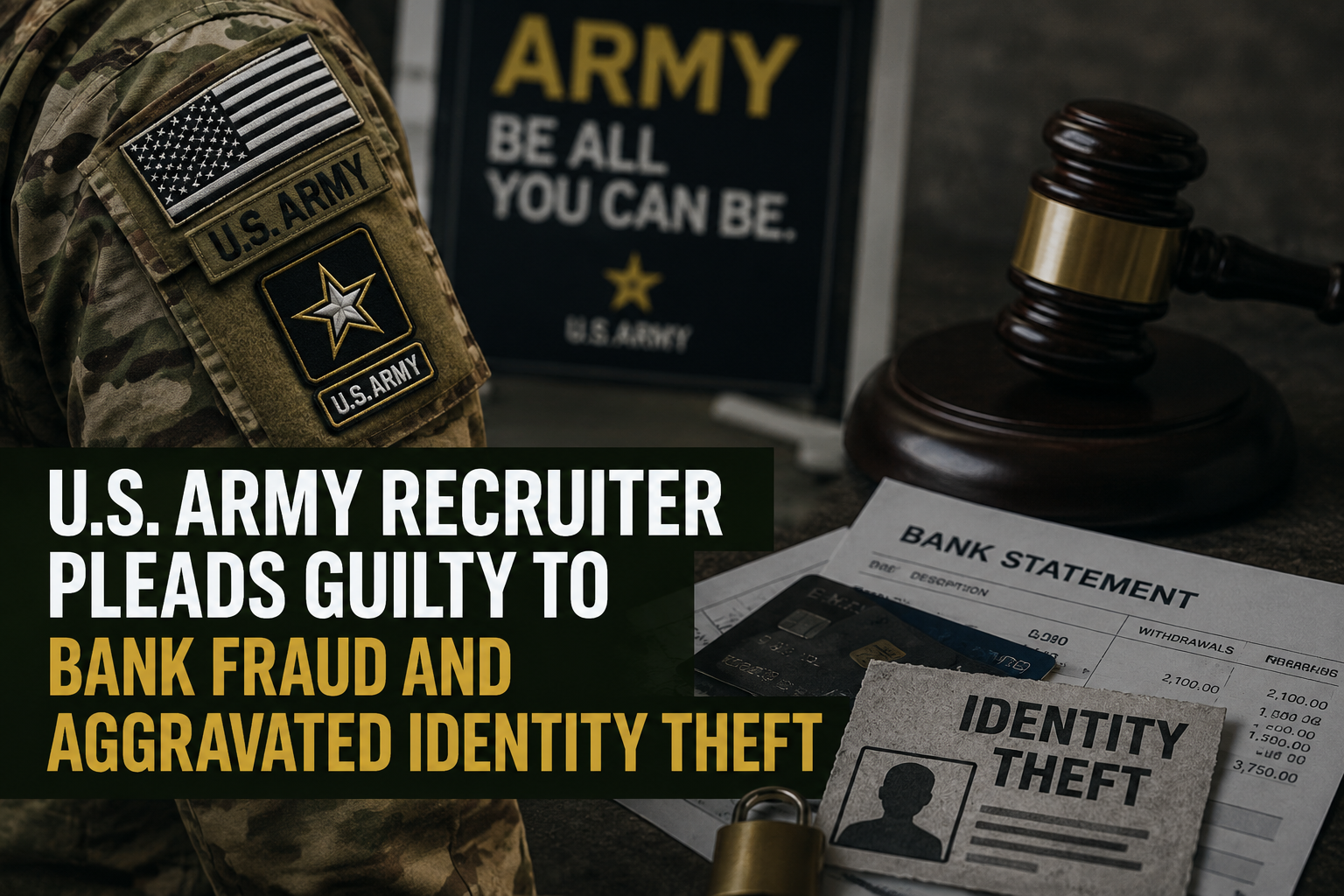
This month, news broke that a former Sergeant First Class and U.S. Army Recruiter, Jane Crosby, 35, of Jersey City, New Jersey, pleaded guilty to bank fraud and aggravated identity theft [1]. This isn't just a story about a crime; it's a stark reminder of the vulnerabilities we face, even from within our ranks, and why safeguarding your personal identifying information (PII) is a non-negotiable mission.
The Betrayal of Trust: What Happened
According to documents filed in the case, between September and December 2023, SFC Crosby engaged in a fraudulent scheme that exploited her position of trust. She used her access to obtain the PII of seven U.S. Army recruits and recruit candidates. Without their knowledge or consent, she then submitted
fraudulent bank account applications to a credit union on their behalf. These accounts, known as “Pre-Active Duty Membership” accounts, are specifically designed to facilitate the direct deposit of salaries for soon-to-be service members [1].
Once these accounts were opened, Crosby didn't stop there. Posing as the victims, she then applied for approximately $266,000 in loans and credit card accounts. She used these accounts to deposit fraudulent checks and subsequently withdraw funds. This wasn't a small-time operation; it was a calculated and extensive scheme that leveraged the very system designed to support our newest recruits [1].
The Charges and the Consequences
SFC Crosby pleaded guilty to one count of bank fraud and one count of aggravated identity theft. The bank fraud charge alone carries a maximum penalty of 30 years in prison and a $1,000,000 fine. The aggravated identity theft count adds a mandatory minimum of two years in prison, consecutive to any other sentence, and a maximum fine of up to $250,000 [1]. These are serious consequences for a serious breach of trust.
The Ripple Effect: Why This Hits Home
This case isn't just about one bad apple; it has a broader impact on the military community:
•Erosion of Trust: Recruiters are often the first point of contact for young men and women considering service. Incidents like this can erode the fundamental trust that recruits and their families place in the military system.
•Vulnerability of New Recruits: New recruits are often young, inexperienced, and eager to begin their military careers. They are particularly vulnerable to exploitation, as they are required to provide sensitive personal information during the enlistment process.
•Financial Readiness Impact: Identity theft and bank fraud can devastate a person's financial standing, impacting credit scores, future loan applications, and overall financial stability. For new service members, this can create significant hurdles before their careers even properly begin.
•Reputational Damage: While one individual's actions don't define the entire recruiting force, such incidents can cast a shadow over the thousands of dedicated and honorable recruiters who genuinely serve with integrity.
Safeguarding Your PII: Your Defensive Playbook
This incident serves as a critical reminder that protecting your Personal Identifying Information (PII) is an ongoing mission. Whether you're a recruit, active-duty, a veteran, or a military family member, vigilance is key. Here’s your defensive playbook to protect yourself from fraud and identity theft:
1. Be Skeptical, Always Verify
Even when dealing with official channels, a healthy dose of skepticism is warranted. If something feels off, it probably is.
•Actionable Step: If a recruiter or anyone else asks for sensitive information outside of official, secure channels, question it. Verify requests by contacting the official recruiting office or a trusted military contact directly, using independently obtained contact information (not what the person provides you).
•Common Frustration:
"It's hard to know who to trust." This is precisely why you must rely on official sources and cross-reference information. When in doubt, escalate to a higher authority or a trusted third party like a VSO.
2. Guard Your Documents Like Classified Material
Your Social Security card, driver’s license, passport, and birth certificate are your most valuable personal assets. Treat them as such.
•Actionable Step: Never give out your Social Security number unless absolutely necessary and to a verified, trusted entity. Be extremely cautious about sharing copies of identification documents. If you must provide them, ensure they are handled securely and ask about their data retention policies.
3. Monitor Your Financial Accounts and Credit Report
Regular vigilance can catch fraudulent activity early, minimizing damage.
•Actionable Step: Regularly check your bank statements, credit union accounts, and credit card activity for any unauthorized transactions. You are entitled to a free credit report from each of the three major credit bureaus (Equifax, Experian, and TransUnion) annually at AnnualCreditReport.com. Review them for any suspicious accounts or inquiries. Consider placing a fraud alert or credit freeze if you are concerned.
4. Understand the Risks of PII Sharing
In the digital age, our PII is constantly at risk. Be aware of how and where your information is being used.
•Actionable Step: Be wary of phishing emails, suspicious texts, or phone calls asking for personal information. The VA, DoD, or your bank will rarely ask for sensitive information via unsolicited communication. When in doubt, hang up and call the official number yourself.
5. Report Suspicious Activity Immediately
If you suspect you’ve been a victim of fraud or identity theft, act quickly.
•Actionable Step: Contact your bank or credit union immediately to report unauthorized activity. File a report with the Federal Trade Commission (FTC) at IdentityTheft.gov. Notify the Department of the Army Criminal Investigation Division (CID) if it involves military personnel or activities. The faster you report, the better your chances of mitigating the damage.
Addressing Common Frustrations and Misconceptions
•"It won't happen to me." This is a dangerous mindset. Fraud and identity theft can happen to anyone, regardless of their background. The best defense is proactive prevention.
•"The military should protect my information." While the military has protocols in place, individual actions and human error can create vulnerabilities. Ultimately, you are the first line of defense for your own PII.
•"It's too complicated to protect myself." While it requires diligence, the steps are straightforward. Think of it as a personal security detail for your data. A few minutes of vigilance can save you countless hours of headaches and financial distress.
Conclusion
The guilty plea of a U.S. Army recruiter for bank fraud and aggravated identity theft is a sobering reminder of the importance of trust and vigilance within our community. While such betrayals are rare, they underscore the critical need for every service member, recruit, and veteran to be hyper-aware of their personal information and how it's handled. Our military community is built on integrity and mutual support, and when that foundation is shaken, it's up to each of us to reinforce it. By understanding the risks and implementing proactive security measures, we can protect ourselves and our battle buddies from those who seek to exploit our trust. Stay sharp, stay vigilant, and safeguard your future.
Have you or someone you know experienced identity theft or fraud, especially related to military service? What steps did you take to recover, and what advice would you offer? Share your experiences and insights in the comments below to help educate and protect our community. Let's turn this unfortunate incident into a learning opportunity for all. And if you found this information valuable, please share it with anyone who might benefit from this critical intel.
References
[1]: https://www.justice.gov/usao-nj/pr/us-army-recruiter-pleads-guilty-bank-fraud-and-aggravated-identity-theft "U.S. Army Recruiter Pleads Guilty to Bank Fraud and Aggravated Identity Theft"