The Pentagon is using AI to help plan airstrikes in Iran. Full stop. That sentence would have sounded like science fiction ten years ago. Today it's a news report from March 2026, and it's generating reactions across the military community that range from 'obviously, we should be using every advantage we have' to 'who exactly is accountable when the AI is wrong?'
Both reactions are legitimate. And if you're a service member, a veteran who still thinks about these questions, or a military family member watching this unfold, you deserve a clear-eyed explanation of what AI-assisted strike planning actually means — stripped of both the hype and the fear.
What AI-Assisted Planning Actually Involves
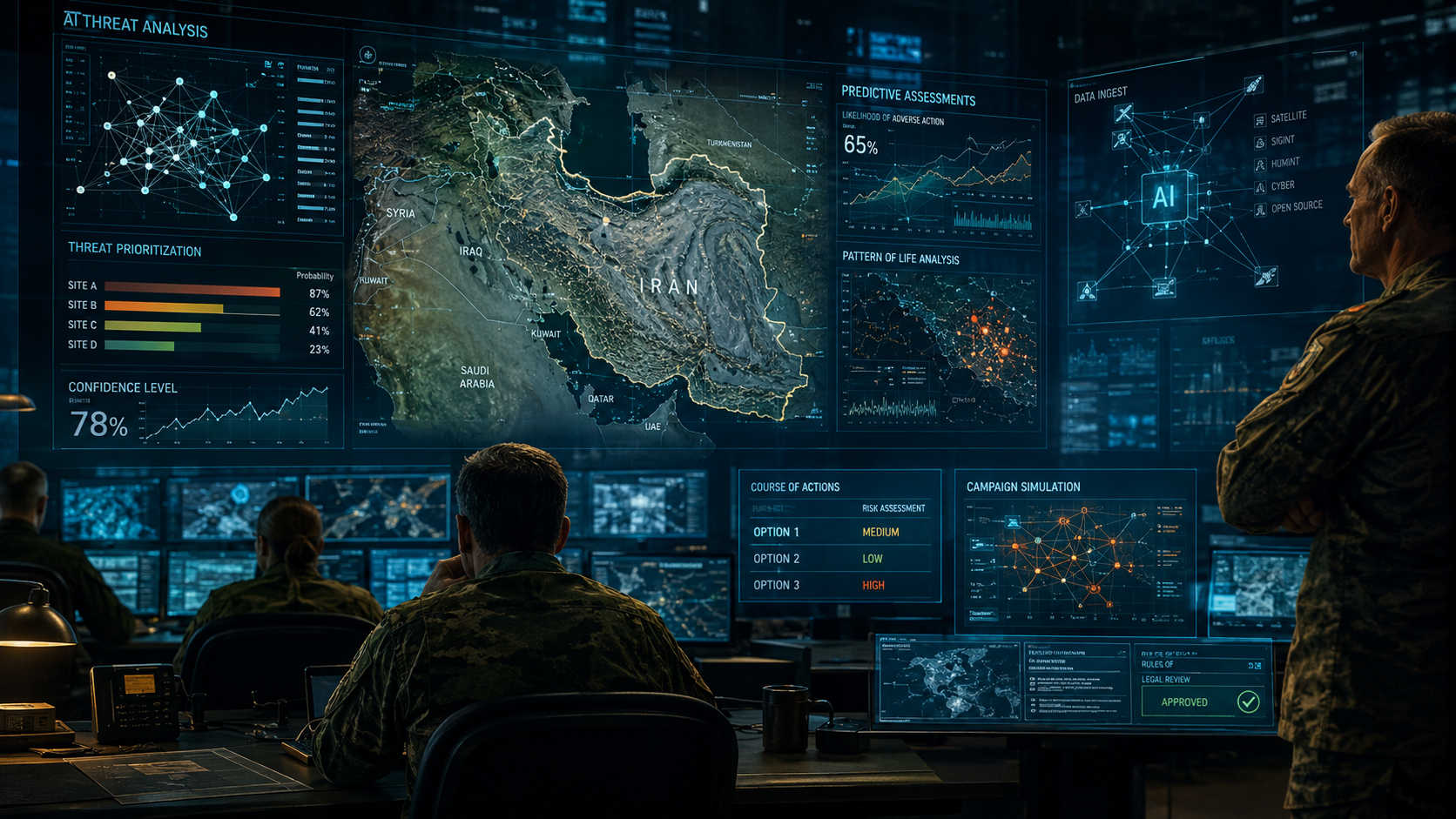
When DoD says AI is being used to assist with strike planning, the realistic operational picture involves AI systems processing vast amounts of intelligence data — imagery, signals, pattern-of-life analysis — faster than human analysts can and presenting commanders with target recommendations, confidence assessments, and collateral damage estimates.
What it does not mean, at least in the current framework, is that an algorithm is independently deciding to launch weapons. The human-in-the-loop requirement — the legal and doctrinal principle that a human being must authorize lethal force — remains in place. AI is a decision support tool. It is not, at this stage, the decision-maker.
Why This Is Different from What Came Before
Military planners have always used analytical tools to support targeting decisions. The difference now is speed, scale, and the opacity of the reasoning. A human analyst can explain why they assessed a target as high-priority. An AI system's recommendation may be correct — but understanding why it made that recommendation requires interpretability tools that don't always exist or aren't always applied.
That opacity has accountability implications. When a strike is planned with AI assistance and something goes wrong — civilian casualties, a misidentified target, a timing error — the after-action question of 'who made this decision and why' becomes significantly more complicated.
The Anthropic Situation — and Why It Matters
One specific wrinkle in the 2026 AI-military story: the AI company Anthropic — maker of the Claude AI assistant — has reportedly been pushing back against DoD's use of its models in weapons systems or mass surveillance applications. That's a significant corporate ethics stance in a market where defense contracts are enormously valuable.
The tension between AI companies' ethical constraints and DoD's operational requirements is a genuine policy problem that will shape which AI systems get deployed, under what conditions, and with what safeguards. This isn't an abstract ethics seminar — it's a near-term procurement and operational challenge.
What Military Professionals Should Be Thinking About
-
AI literacy is becoming a core military competency. If you don't understand the basics of how these systems work, you won't be equipped to question their outputs — which is exactly what commanders need to do.
-
The accountability framework for AI-assisted targeting is still being written. JAG officers, doctrine writers, and senior leaders have a role in shaping that framework now.
-
The operators who understand both the tactical environment and the AI's limitations will be invaluable. Develop technical literacy without losing your operational judgment.
-
For veterans transitioning into the defense tech space: AI systems integration, AI ethics advisory, and AI red-teaming are growing career lanes with direct military application.
The Question Nobody Is Asking Loudly Enough
Here's the uncomfortable question the military community needs to sit with: if AI-assisted planning speeds up the targeting cycle, lowers the cognitive burden on human decision-makers, and produces statistically better outcomes on average — but occasionally produces catastrophic errors that a human planner might have caught — what's the right answer?
That is not a rhetorical question. It's the actual policy challenge that DoD's lawyers, ethicists, and warfighters are working through right now. Veterans who've been in the targeting chain, who've seen what bad calls look like and what the accountability process looks like, have a perspective that civilian tech developers don't have. That perspective needs to be in the room.
Join the Conversation
Have you worked in targeting, intelligence, or operational planning? What's your take on AI-assisted decision-making in warfare? The veteran community's operational expertise is critical to getting this right — share your perspective below.