Military professionals spend a lot of time thinking about war. Less time gets spent thinking about the moments just before war — or the moments where the military's presence is the reason a conversation is even happening. The meeting at Guantanamo Bay on May 29, 2026, was one of those moments.
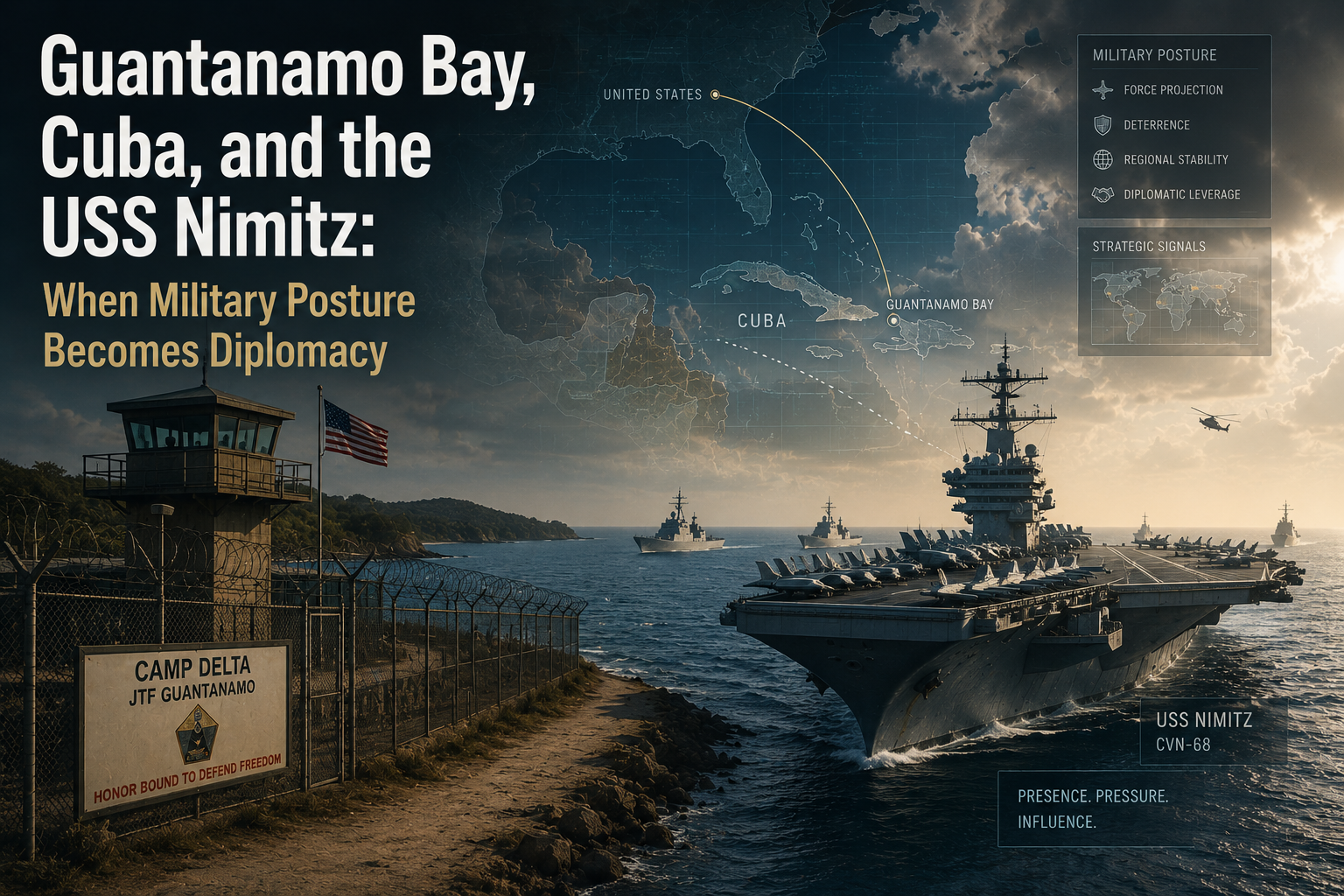
The commander of U.S. Southern Command met with senior Cuban military officials on the perimeter of Naval Station Guantanamo Bay — a meeting described as rare, conducted against a backdrop of the USS Nimitz carrier strike group arriving in the Caribbean and significant U.S. economic pressure on the Cuban government. It was, in classic military parlance, a 'show of force that enabled a show of diplomacy.'
What This Meeting Actually Was
Military-to-military meetings between the U.S. and Cuba are genuinely rare. The two countries don't have a defense relationship — there's no Status of Forces Agreement, no joint exercises, no routine exchange programs. The last high-level contacts between U.S. and Cuban military officials were related to the 2015-2016 normalization period, which has since been substantially reversed.
The meeting at Guantanamo's perimeter — literally at the fence line between the U.S. installation and Cuban sovereign territory — was symbolically loaded. It was a direct communication channel in a moment when civilian diplomatic channels are strained. And it happened because the USS Nimitz in the Caribbean created enough of a strategic signal that both parties had reason to talk.
The Role of Military Presence in Diplomacy
Veterans who've served in SOUTHCOM, EUCOM, or INDOPACOM have seen this dynamic firsthand: military presence creates the conditions for diplomatic engagement. A carrier strike group in the Caribbean isn't just a combat capability — it's a message, and the message creates a response that opens communication channels.
This is what the military calls 'security cooperation' in its broadest sense — the use of military relationships, presence, and engagement to shape the strategic environment. It's not glamorous. It doesn't get the same coverage as airstrikes. But it's one of the most consistent functions the military performs in gray-zone competition.
What Guantanamo Bay Actually Represents in 2026
GTMO occupies a unique place in American legal, political, and military history that the base's operational reality doesn't fully capture. In 2026, Naval Station Guantanamo Bay is simultaneously a functioning military installation supporting Caribbean operations, the location of ongoing detention operations under the military commission system, and a persistent diplomatic irritant in U.S.-Cuba relations.
For service members stationed there — and it remains an active duty installation with billets across multiple MOSs — the national attention the base receives rarely reflects the day-to-day reality of living and working on an island installation with unique logistical and operational constraints.
Leadership Lessons From the Meeting
-
Military leaders are often the last functional communication channel when diplomatic relationships break down. That responsibility requires preparation, judgment, and cultural intelligence.
-
The ability to communicate strategic intent across a fence line — literally — without an interpreter misunderstanding, without a diplomatic incident — is a high-level professional skill.
-
Military officers who develop regional expertise, language skills, and cultural understanding of their AOR become irreplaceable assets in exactly these moments.
-
For transitioning service members considering defense policy or foreign affairs careers: this is the intersection of military service and strategic impact. The State Department, DoD policy shops, and think tanks all need people who understand both the military instrument and the diplomatic context.
Join the Conversation
Have you served in SOUTHCOM, at GTMO, or in any capacity where military presence directly shaped a diplomatic or political outcome? Share that experience — the lessons from those assignments are exactly what the next generation of military professionals needs to hear.