If you've been driving through the Fort Stewart gate using Trusted Traveler — that streamlined access program that let pre-approved visitors move through faster — that option is gone. Effective March 2, 2026, it's suspended until further notice.
No warning. No projected end date. Suspended.
If that caught you off guard, you're not alone. And if you've got family members, contractors, or recurring visitors who relied on that program, they need to know before they show up at the gate and get held up in a line they didn't budget time for.
What Changed and What It Means
Here's the current access picture at Fort Stewart and Hunter Army Airfield:
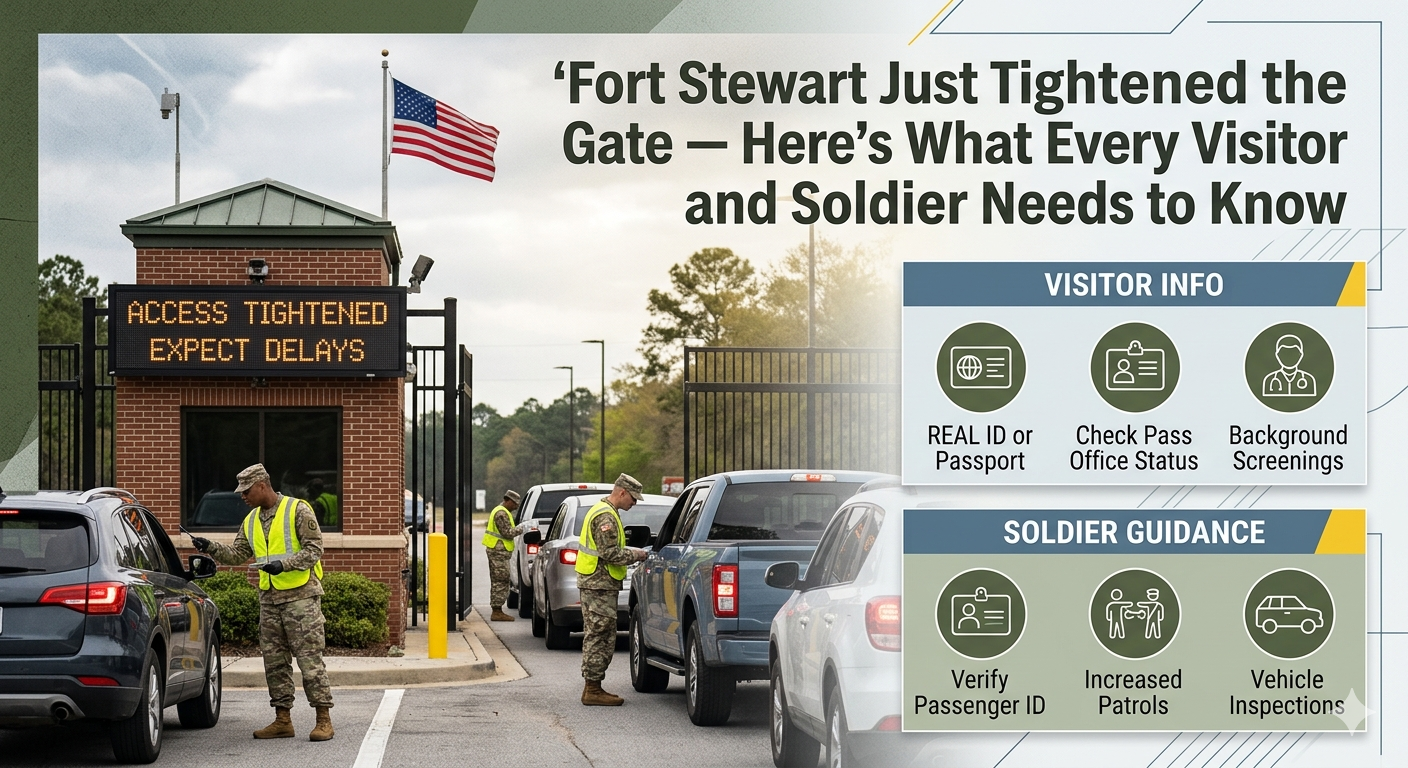
- Trusted Traveler program: suspended indefinitely. No bypass lane. No expedited access.
- All individuals 18 and older must present a valid government-issued ID at every entry, every time.
- All commercial vehicles — including their drivers and all occupants — will undergo inspection.
- All non-Department of War affiliated visitor POVs (privately owned vehicles) and hand-carried items are subject to inspection.
- Anticipate potential delays, especially during peak entry hours: morning rush, lunch, and end of duty day.
This isn't a temporary inconvenience waiting on a construction project. This is a deliberate security posture decision by installation leadership in response to an assessed threat environment. The chain of command took a look at what they were seeing and made a call.
Why Security Posture Shifts Happen — and Why Soldiers Should Understand It
Every soldier who went through PLDC or ALC has had the force protection briefing. Access control is a fundamental layer of installation security. The Trusted Traveler program, while convenient, created a faster lane through the perimeter — and in a changed threat environment, that lane is now closed.
This matters beyond the inconvenience of longer gate lines. Here's the framework:
FPCON levels drive access decisions. When the installation force protection condition changes, so do the requirements at the gate. Fort Knox is currently listed at FPCON Bravo — a heightened state that signals an increased or more predictable threat. Installations respond to FPCON shifts through access control tightening, among other measures.
Soldiers assigned to Fort Stewart should:
- Brief their families on the new gate requirements before dependents or visitors come on post
- Brief contractors and regular vendors who service your unit or household goods — they need ID and vehicle documentation ready
- Plan for 10–15 additional minutes on commute times during peak hours until the backlog patterns stabilize
For Visitors and Contractors: How to Prepare
If you're visiting a soldier at Fort Stewart or conducting business on post as a contractor:
- Bring a valid government-issued photo ID. State driver's license, passport, CAC card — something official and current. An expired ID will get you turned around at the gate.
- Have all vehicle occupants 18 and older ready to present ID individually. This is not a per-vehicle process — it is a per-person process.
- If you're a commercial driver, have your vehicle documentation, company credentials, and the name and unit of your point of contact on post ready before you reach the barrier.
- Don't plan for expedited entry. Build extra time into your schedule. The guards are doing their job, and the line will move — but it will move at the pace of thorough inspection.
Broader Context: Security Is the Mission Too
For soldiers who sometimes view gate procedures as administrative friction, here's the honest perspective from someone who's been on both sides of the barrier:
Access control is force protection. Every vehicle that rolls through that gate unchecked is a potential vulnerability. The guards standing post at 0530 in the rain aren't checking IDs to make your morning difficult — they're the first layer of defense for every soldier, family, and civilian working on that installation.
When something changes at the gate level, it's worth taking a moment to understand why before defaulting to frustration. Installation leadership doesn't suspend a convenience program without a reason.
And if you're a leader — a squad leader, a platoon sergeant, a company commander — make sure your soldiers know the current access requirements. The worst version of this situation is a soldier's family member getting turned around at the gate because nobody thought to pass the word.
Pass the word.
The Bottom Line
Fort Stewart's security posture has tightened. The Trusted Traveler lane is closed, inspections are thorough, and ID requirements are non-negotiable. That's not bureaucracy — that's the installation doing its job.
Adjust your timing. Brief your family. Have your ID ready.
Are You at Fort Stewart?
Have the new access requirements affected your daily routine? How is your unit handling the briefing for families and visitors?
Drop your experience in the comments — especially if you have tips for navigating the new entry procedures efficiently.
Share this with someone who regularly accesses Fort Stewart so they're not caught off guard at the gate. And follow Mil Reporter for installation security updates, force protection news, and real-talk military community content.