Picture this: It's 0530. You've got PT formation at 0600. You're rolling toward the All American Parkway gate — same route you've taken every single day for the past two years — and you hit a wall of orange cones and a sign that says "Road Closed." Nobody briefed you. Your squad leader didn't say a word. And now you're already late and rerouting through back roads you've never used in your life.
This isn't hypothetical. For thousands of soldiers and families at Fort Bragg, this scenario is coming — and the time to prepare is now, not after the holiday weekend.
What Was Announced — and Why It's a Big Deal
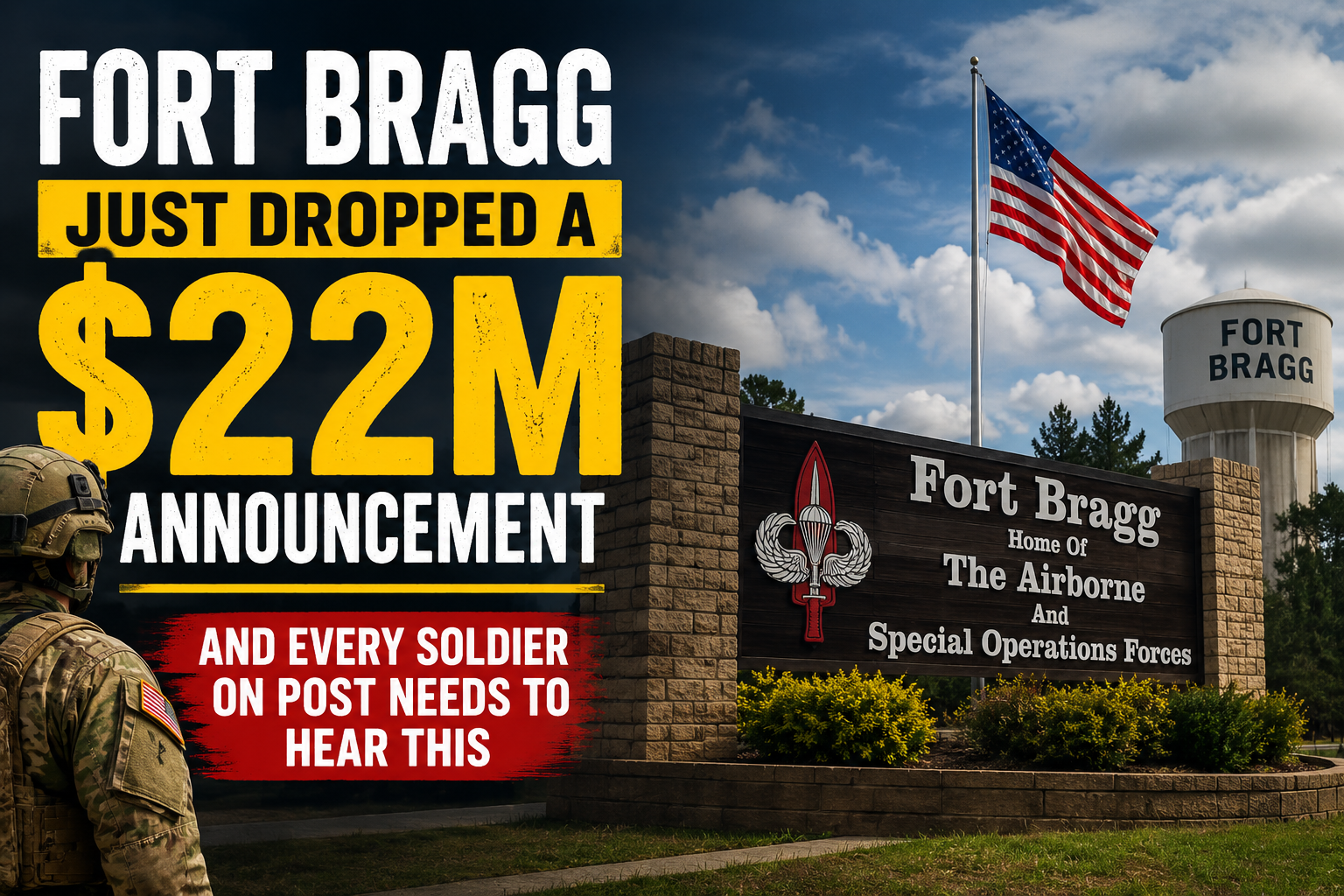
At the annual State of Fort Bragg address on May 5, 2026, Lt. Gen. Gregory K. Anderson, commanding general of XVIII Airborne Corps, made it official: the All American Parkway gate and the Gruber Road Bridge are closing after July 4th weekend for a complete structural rebuild. The estimated cost: $22 million.
This isn't a routine maintenance window. Anderson said both the road and bridge require long-term structural repairs — not patches, not a quick asphalt overlay. A gut-and-rebuild.
And that announcement came with an even bigger number buried in the brief: Fort Bragg is sitting on an estimated $3 billion in deferred infrastructure projects. On top of that, 43% of the installation's 1,462 miles of road are in need of repair.
If you've ever driven on post and wondered if the potholes were part of a mobility obstacle course, now you have your answer.
Facial Recognition at the Gates — Here's What That Actually Means for You
To compensate for the reduced gate throughput during construction, Fort Bragg is rolling out facial recognition technology — already validated on post — to speed up access at remaining entry points.
For soldiers and family members, that means your biometrics will be part of the gate clearance process. If you're inbound on PCS orders or haven't updated your records recently, get ahead of this before the closure hits. Walk into the ID card facility now. Don't wait until you're sitting in a gate line at 0545 watching the clock.
For civilian contractors and visitors, expect additional screening. The guard force redistribution plan, according to Col. Craig Giancaterino, Commander of the 16th Military Police, means security personnel will be concentrated at the remaining open gates. Throughput will be managed — but patience is going to be a mission requirement.
What This Means for Fort Bragg Families
The gate closure isn't just a soldier problem. If you're a military spouse doing morning school runs, a contractor pulling daily access, or a retiree using post facilities, your routine is about to change.
Here's what you need to do before July 4th:
- Identify alternate gate routes now. Don't wait until construction tape goes up. Drive the alternate routes this week so they're not unfamiliar when it counts.
- Coordinate with schools and daycares. If your drop-off or pick-up window depends on a specific gate, talk to your child's school about adjusted timing or alternate pickup arrangements.
- Talk to your unit S4 and first sergeant. If the route change affects your ability to make formation, that's a conversation to have now — not the morning you're late.
- Check the Fort Bragg garrison website and official social media for construction updates. This is a live situation and timelines can shift.
The Bigger Infrastructure Problem Nobody Wants to Talk About
Here's the part that deserves more conversation in the barracks, the motor pools, and the spouse Facebook groups:
A $3 billion infrastructure backlog at one installation is a national readiness issue, not just a local inconvenience.
Fort Bragg is America's premiere power projection platform. The 82nd Airborne Division can be wheels-up in 18 hours. Special Operations Forces based here are deployed globally on any given day. And yet the roads, gates, and physical infrastructure supporting that force have been deteriorating for decades.
This isn't a jab at garrison leadership — the garrison commander, the DPW team, and the installation staff are working the problem. This is a systemic issue of underfunded military construction budgets over multiple administrations, deferred maintenance compounding year over year, and an Army that has historically invested more in end-items than in the facilities that house and sustain the force.
The good news: money is now being allocated. The $22 million project is one piece of a larger investment picture. But soldiers and families should know: the disruptions aren't over. More construction, more closures, and more reroutes are coming as the backlog gets worked down.
The Bottom Line
Fort Bragg is transforming — and that's ultimately a good thing. But transformation has friction, and that friction starts showing up in your morning commute before it shows up in any official press release.
Stay informed. Update your biometrics. Know your alternate routes. And if you're inbound on PCS orders, start that housing and access office coordination the day your orders drop — not the week you're scheduled to in-process.
America's Home of the Airborne is getting rebuilt. Don't let the construction catch you flat-footed.
Have You Dealt With the Fort Bragg Gate Changes?
Sound off in the comments. Are you stationed at Bragg and already feeling the infrastructure squeeze? Did you hear about the $22M announcement from your chain of command — or from us? Share your experience and help your fellow soldiers and families plan ahead.
Tag a Bragg soldier or mil spouse who needs to see this before July 4th. And follow Mil Reporter for real-time installation updates that your first sergeant might not have gotten around to briefing yet.