If you've ever been a part of a government acquisition process, you know the rhythm: requirements document. Market research. RFP. Evaluation period. Protest window. Award. Modification. Another modification. Eighteen months for what the private sector does in six weeks. The Army is trying to break that cycle — at least for drones — and the approach they've chosen is worth understanding.
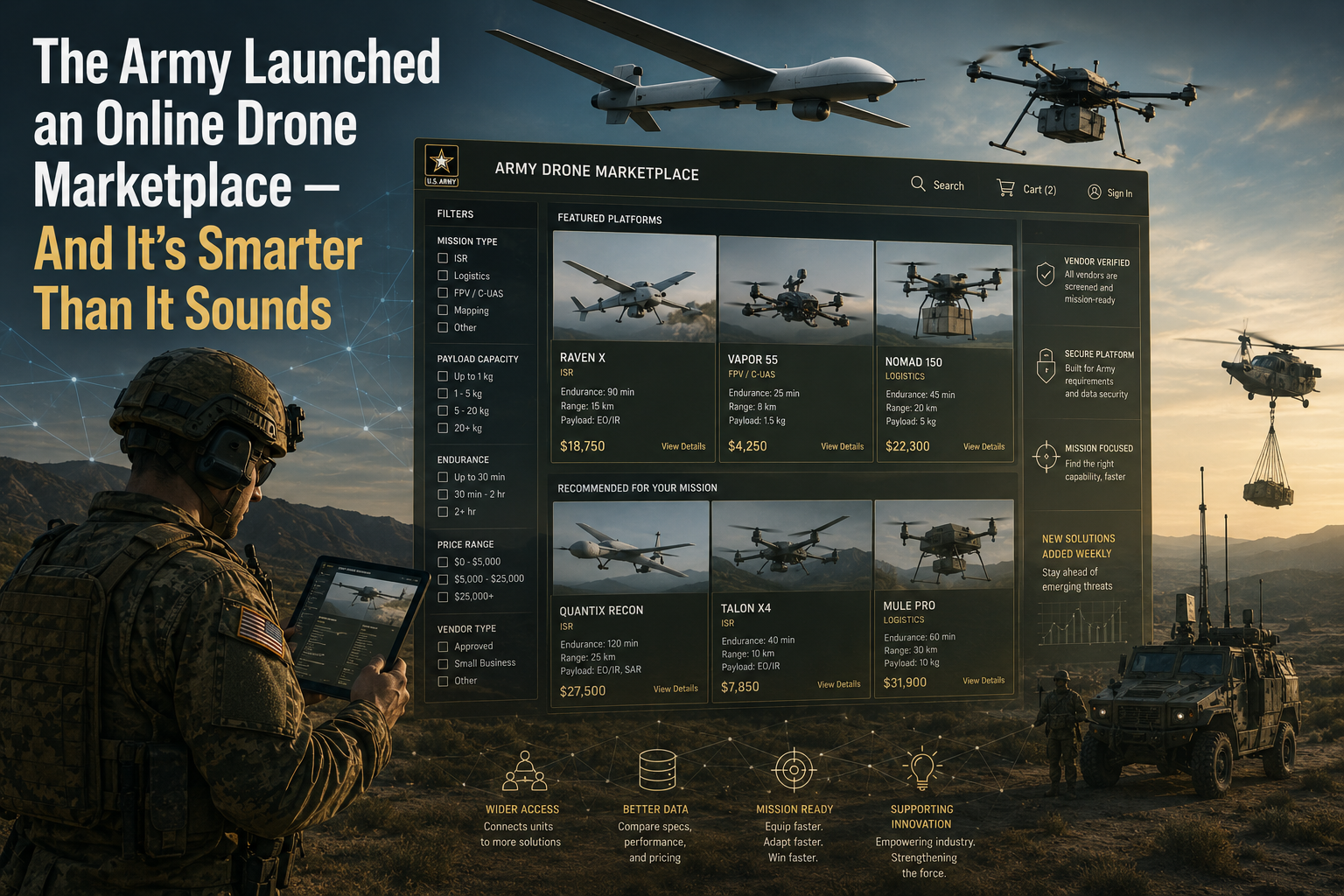
In March 2026, the U.S. Army launched an online marketplace specifically designed to revolutionize drone acquisition. The concept: instead of a traditional procurement cycle for every unmanned system, create a platform where vetted vendors can list UAS capabilities and units can rapidly procure them through a streamlined process — getting systems to soldiers faster and at reduced administrative cost.
Why Traditional Acquisition Fails the UAS Mission
Drone technology moves at commercial speed. A system that's best-in-class today may be obsolete in 18 months. The traditional DoD acquisition timeline — which can span years for a major program — simply cannot keep pace with the UAS threat environment, which is itself evolving rapidly based on lessons from Ukraine, the Middle East, and U.S. adversaries' own development programs.
The result has been a persistent gap: warfighters know what capability they need, vendors have it off-the-shelf, and the acquisition system can't move fast enough to connect them. Units have been improvising — using other-transaction authorities, rapid fielding initiatives, and sometimes just buying commercial drones out of pocket and requesting reimbursement.
What the Marketplace Actually Does
The Army's online drone marketplace creates a pre-vetted vendor ecosystem where companies that have cleared basic eligibility requirements can list their UAS capabilities, and Army units can procure from that catalog without going through a full acquisition cycle for each purchase. It's similar to the GSA Schedule concept — but purpose-built for unmanned systems and designed to move significantly faster.
-
Vendors are pre-qualified, reducing the unit-level burden of conducting market research for each procurement.
-
Pricing is pre-negotiated or competitively established, reducing the back-and-forth of individual negotiations.
-
The platform allows for rapid iteration — new systems can be added as technology evolves without requiring a full program restart.
-
Small businesses and veteran-owned businesses have a direct path to the marketplace that bypasses some of the traditional barriers to DoD contracting.
What This Means for Veteran Entrepreneurs in the Defense Space
This is the part where veteran entrepreneurs need to pay close attention. The Army's UAS marketplace is explicitly designed to be accessible to smaller vendors — which includes veteran-owned small businesses with relevant technology capabilities. If you've built or are building a company in the drone, counter-drone, or UAS component space, this marketplace is a direct channel to Army acquisition that didn't exist two years ago.
Getting on the marketplace requires meeting eligibility criteria — but those criteria are designed to be achievable for qualified small businesses, not just large defense primes. This is the kind of intentional procurement reform that the veteran entrepreneurship community has been pushing for.
For Active-Duty Troops and Leaders
If you're in a unit that needs UAS capability and has been frustrated by the procurement timeline, this marketplace is the resource your S4 should be exploring. The Army didn't build it for headquarters — it built it to get capability to the formation faster. Use it.
And if you're an NCO or officer who has ideas about what drone capabilities your unit actually needs — document those requirements clearly and push them up through the acquisition chain. The marketplace can only offer what vendors produce; the demand signal from the force shapes what vendors build.
Join the Conversation
Are you a veteran entrepreneur in the UAS or defense tech space? Have you navigated the Army's new procurement marketplace? Share your experience — the veteran business community needs practical intelligence on how these systems actually work.